
Academy of Justice · International scientific cooperation
Uzbek Scholarship,
Global Ambition
The Academy of Justice opens a new chapter in insolvency research
Rahmatjon Berdiyarov and Saida Mahmudova’s engagement with John Martin deserves recognition as an expression of scholarly confidence, international openness and commitment to the future of justice.
6 min read
Meeting · 27 October 2026
A confident step onto the international stage
When scholarship carries a nation’s ambition
An academy’s reputation is built by scholars who are prepared to carry its ideas into the world. Their work gives national experience an international voice and brings wider knowledge into the service of their own society.
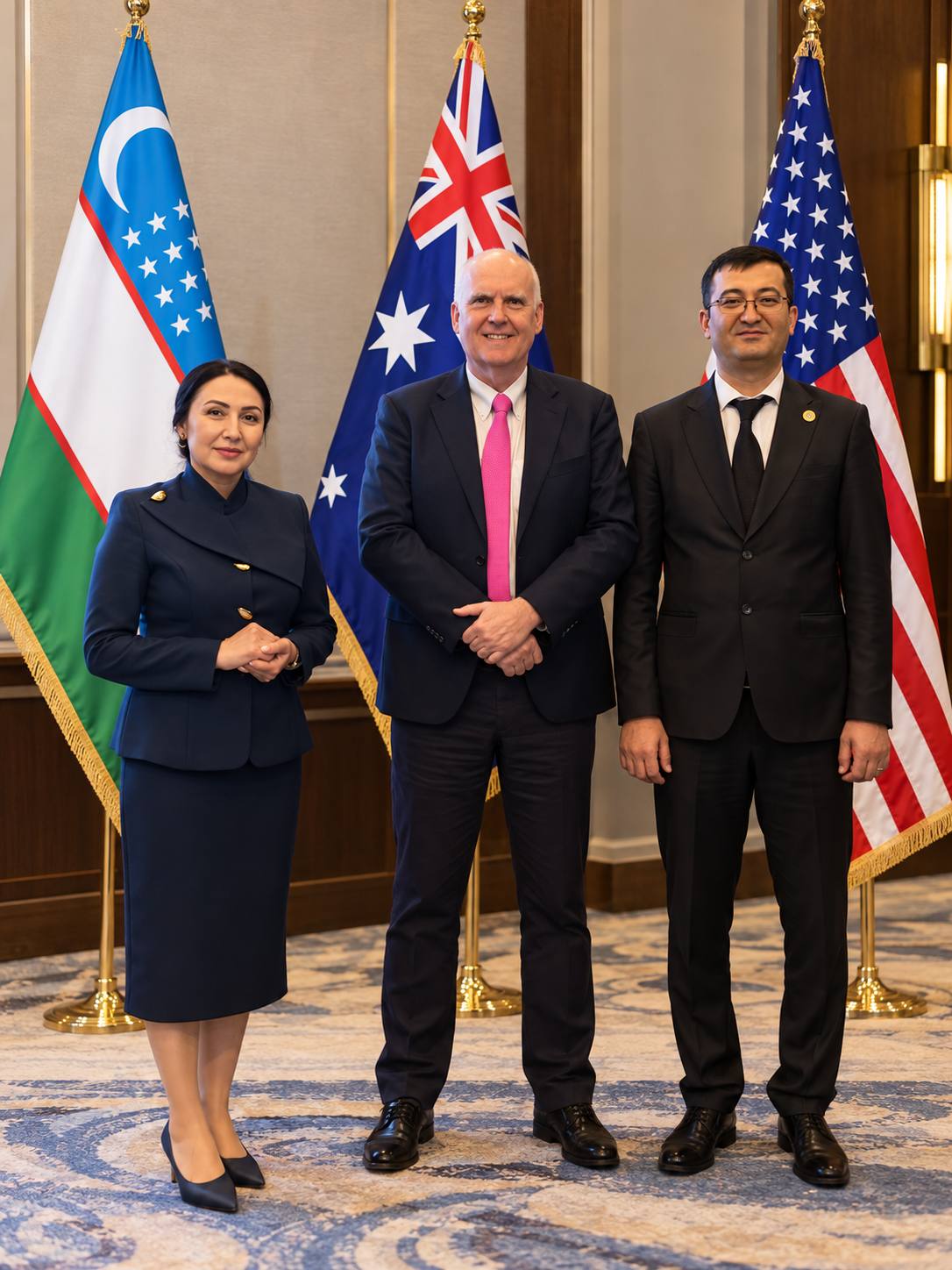
The meeting of 27 October 2026 offers an encouraging expression of that ambition. According to the Academy announcement supplied to this publication, Associate Professor Rahmatjon Berdiyarov, PhD, and Saida Mahmudova met John Martin, former President of the International Insolvency Institute, during an international roundtable organised through cooperation between Uzbekistan’s Supreme Court and the Asian Development Bank.1
Both academics represented the Academy of Justice’s Department of Economic and Legal Sciences. Their conversation placed an important research agenda before an international expert and opened a path towards further cooperation. For Uzbek legal scholarship, this is an initiative worthy of sincere appreciation.
01 / The people behind the initiative
Scholars who give institutional ambition a human face
Berdiyarov and Mahmudova deserve particular recognition for the professional purpose of their engagement. They brought the Academy’s scientific interests into a conversation about the practical demands of law. That is a valuable contribution: helping ideas move between researchers, experienced practitioners and the institutions responsible for justice.
Berdiyarov’s academic preparation includes a PhD in law, as recorded in the Academy’s official faculty profile.4 His associate-professor rank is also recorded in the Higher Attestation Commission’s register.6 Together with Mahmudova’s participation in this exchange, the initiative illustrates how the work of individual academics can broaden an institution’s professional relationships.
In my view, their example deserves to be celebrated for the standard of engagement it represents. Scholars honour their institution when they approach international dialogue with a clear intellectual purpose, an openness to scrutiny and a commitment to the needs of their country. This meeting’s agenda gives good reason to recognise that spirit in the Academy’s representatives.
The finest ambition of legal scholarship is to bring knowledge from the world into the service of justice at home.
Bohodir Sa’dullaev · Author’s perspective
02 / Expertise across borders
A distinguished interlocutor, a substantive conversation
Martin’s professional standing gives this dialogue particular significance. ADB’s published programme for a February 2024 exchange with Uzbek and international judges identifies him as a former President of the International Insolvency Institute and a moderator of discussions on insolvency law and practice.3 That earlier engagement provides a useful indication of his established contribution to international professional exchange.
For the Academy’s researchers, dialogue with such an experienced interlocutor offers a valuable opportunity to examine ideas against perspectives developed across different legal settings. Comparative insight becomes especially useful when it helps clarify a question, test a proposed solution or reveal a practical difficulty that deserves closer study.
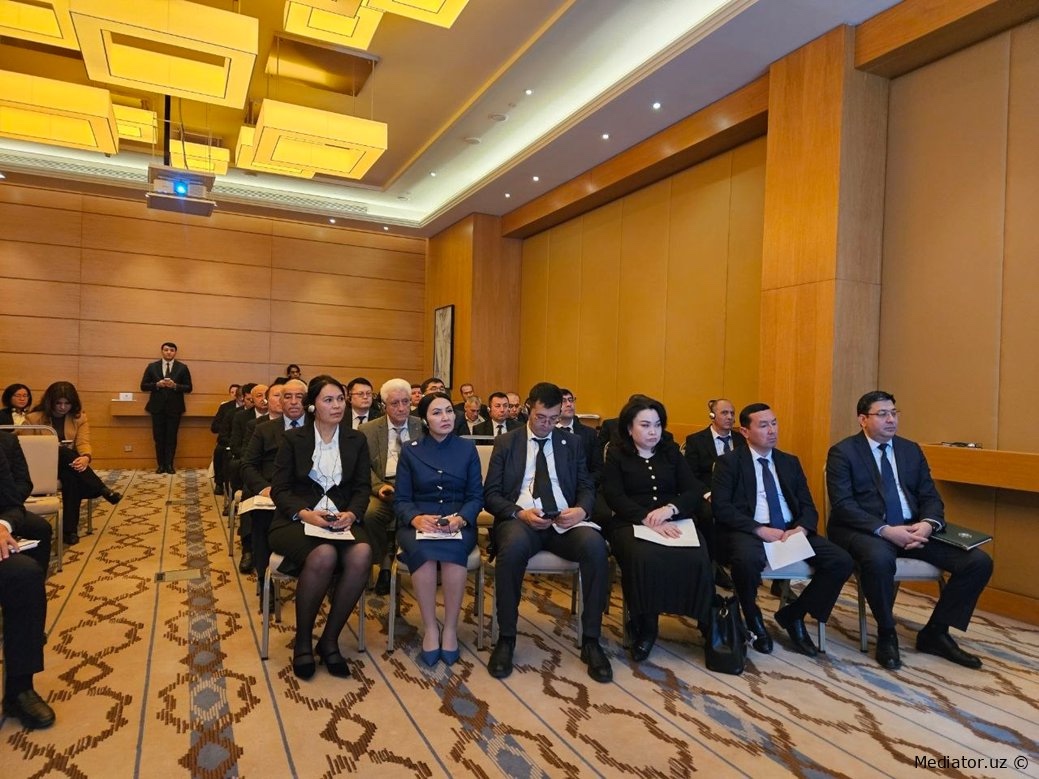
The wider roundtable also deserves recognition. UzA’s report of 27 October describes an event at the Supreme Court involving specialised judges, international experts, ADB and the Konrad Adenauer Foundation. The discussion addressed difficulties in applying insolvency legislation and the value of professional exchange.2 Such a setting brings scholarship into direct contact with the questions that matter to judicial practice.
03 / Research with a public purpose
Serious questions at the heart of economic justice
The supplied meeting account identifies conceptual and practical problems of insolvency law as a central research theme. It also records discussion of creditors’ rights, improvements to national legislation and the development of judicial practice.1 These are subjects of substantial intellectual and public importance.
Financial distress raises difficult questions about responsibility, fairness and the treatment of competing interests. A creditor seeks a credible process for protecting a claim. A struggling enterprise may need an orderly assessment of its future. Those affected by a dispute need decisions they can understand. Research that takes these concerns seriously serves an essential purpose in legal development.
The Academy’s initiative is commendable because it connects a defined field of scientific inquiry with problems encountered in practice. The strongest research can help distinguish a weakness in legal drafting from a difficulty of interpretation, administration or professional preparation. Making those distinctions carefully is demanding work, and it deserves institutional encouragement.
The department’s educational role adds further significance. The Academy’s official description places judicial candidates, serving judges and court personnel among the audiences for its economic-law training.5 International research cooperation therefore offers the prospect of enriching the knowledge that reaches the people who apply the law.
04 / From dialogue to shared inquiry
A promising new chapter for the Academy
According to the announcement, the participants agreed to pursue cooperation within the identified research fields, incorporate relevant foreign experience into their studies and develop joint scientific initiatives.1 This is a meaningful beginning, with the particular activities and their results to be developed through subsequent work.
The opportunity is considerable. Sustained cooperation could support comparative analysis, discussion of difficult cases and the exchange of research findings. It could also give younger scholars an example of how to approach international expertise with confidence and intellectual discipline. These are possibilities that make the initiative worthy of attention and support.
The Academy’s international standing can grow through precisely this kind of purposeful engagement. A respected scholarly institution contributes its own questions, shares its own experience and remains receptive to the insights of others. Berdiyarov and Mahmudova’s initiative offers an encouraging expression of that ambition.
The author’s assessment
Recognition for the initiative. Confidence in the work ahead.
Rahmatjon Berdiyarov and Saida Mahmudova deserve warm recognition for representing the Academy’s research interests in this international dialogue. John Martin deserves appreciation for his engagement, while the participating institutions deserve credit for creating a setting in which professional knowledge could be shared.
I see in this encounter a worthy image of the Academy’s aspirations: intellectually ambitious, open to the world and attentive to the practical responsibilities of justice. Its promise lies in the determination to connect rigorous study with the needs of courts, legal professionals and the people they serve.
That is an ambition worth celebrating. As the cooperation develops, the highest measure of its success will be the quality of the knowledge it produces and the usefulness of that knowledge in practice. The step already taken deserves respect: it places Uzbek legal scholarship in a wider conversation and gives that conversation a clear national purpose.
About the author
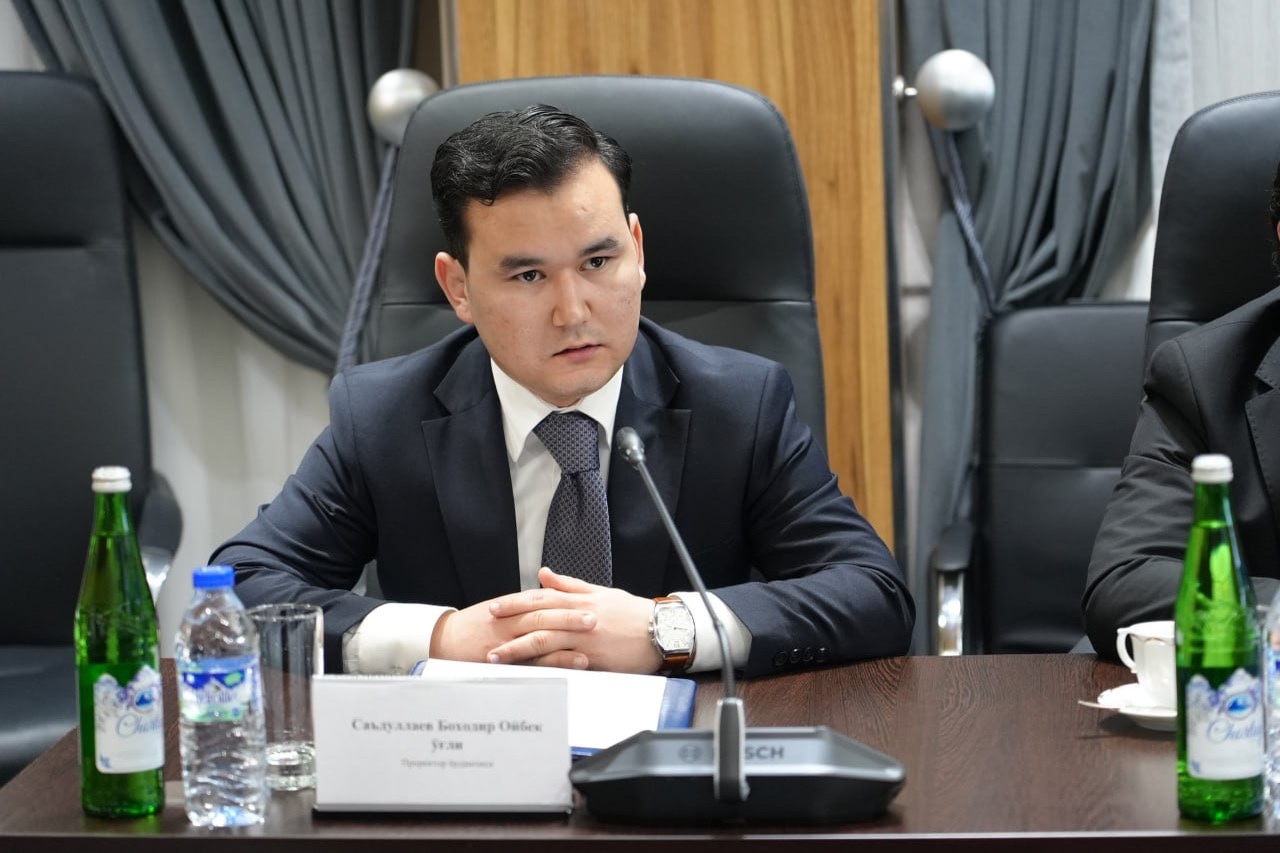
Bohodir Sa’dullaev
Founder & Editor-in-Chief of The Legal Perspective. This article presents the author’s appreciation and assessment of the Academy’s international research initiative.
Meet the authorThe record behind the perspective
Sources & photography
The meeting account and two photographs were supplied to The Legal Perspective. Public sources provide the wider event context and professional background. The author portrait was supplied by the author; the Mediator.uz credit on the conference photograph is retained.
- Academy meeting announcement supplied to The Legal Perspective27 October 2026 · Source for the faculty meeting with John Martin, the research agenda and the agreement to pursue cooperation.
- UzA — Report on the insolvency roundtable ↗27 October 2026 · Independent reporting on the wider event and its participating institutions; Uzbek-language source.
- Asian Development Bank — Dialogue with Uzbek and international judges ↗21 February 2024 · Earlier professional engagement; identifies John Martin as former President of the International Insolvency Institute.
- Academy of Justice — Department and faculty information ↗Official English profile · Berdiyarov’s PhD in Law and departmental affiliation. The profile uses the spelling Rakhmatjon.
- Academy of Justice — Department of Economic and Legal Sciences ↗Official English description · Judicial education and professional training.
- Higher Attestation Commission — Academic rank register ↗Berdiyarov Rahmatjon · Dotsent (associate professor), legal sciences · 9 October 2026; Uzbek-language register.