
C5+1 · An Uzbek perspective
Samarkand
at the Centre
Uzbekistan’s confident moment in C5+1 diplomacy
Marco Rubio’s visit brings a welcome spotlight to a country shaping its partnerships, strengthening regional dialogue and looking towards a more ambitious future.
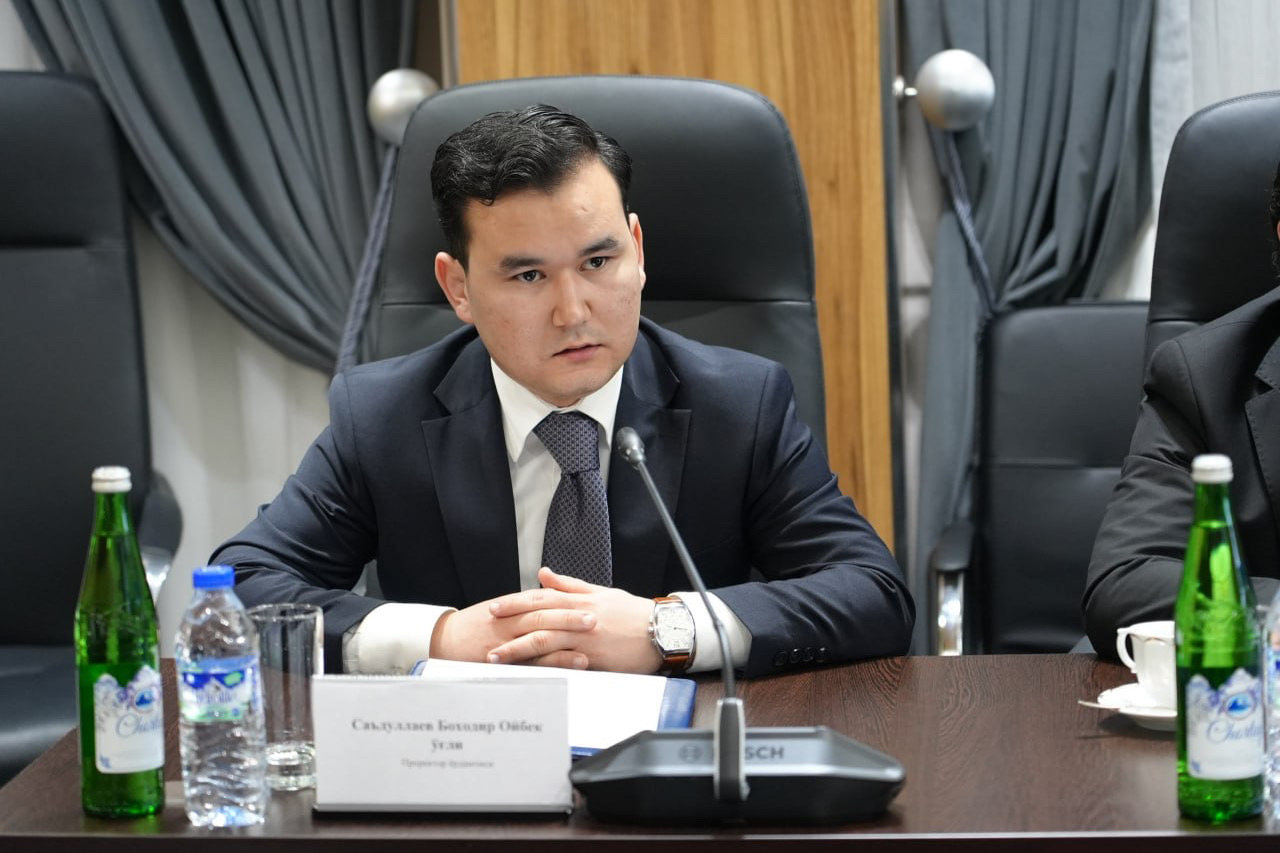
Samarkand has given Uzbekistan a moment to welcome with confidence. The arrival of U.S. Secretary of State Marco Rubio and the gathering of Central Asian foreign ministers put the country at the centre of a conversation about the region’s future. For Uzbekistan, this is an opportunity to show the world the value of its openness, its hospitality and its own diplomatic initiative.
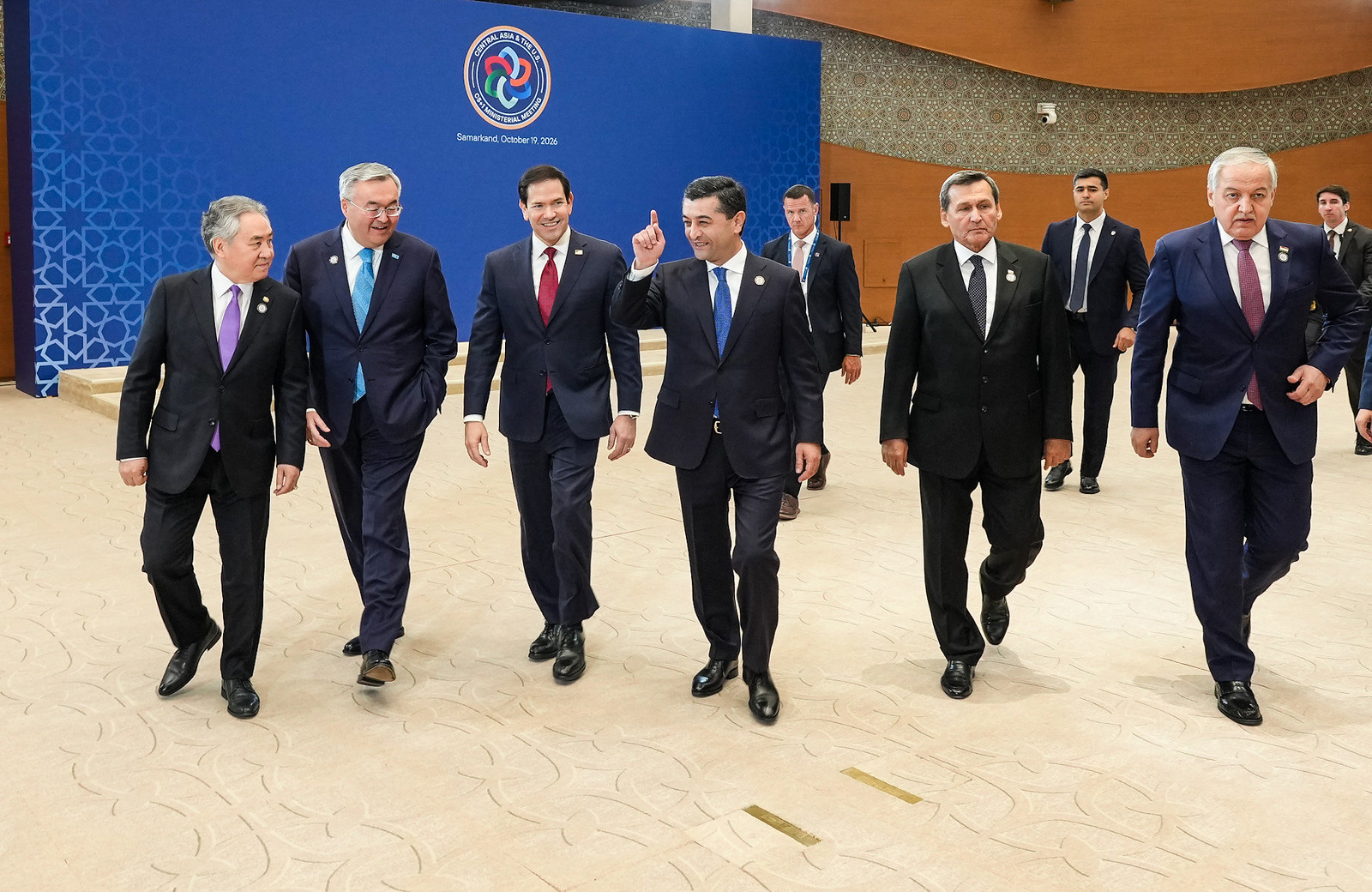
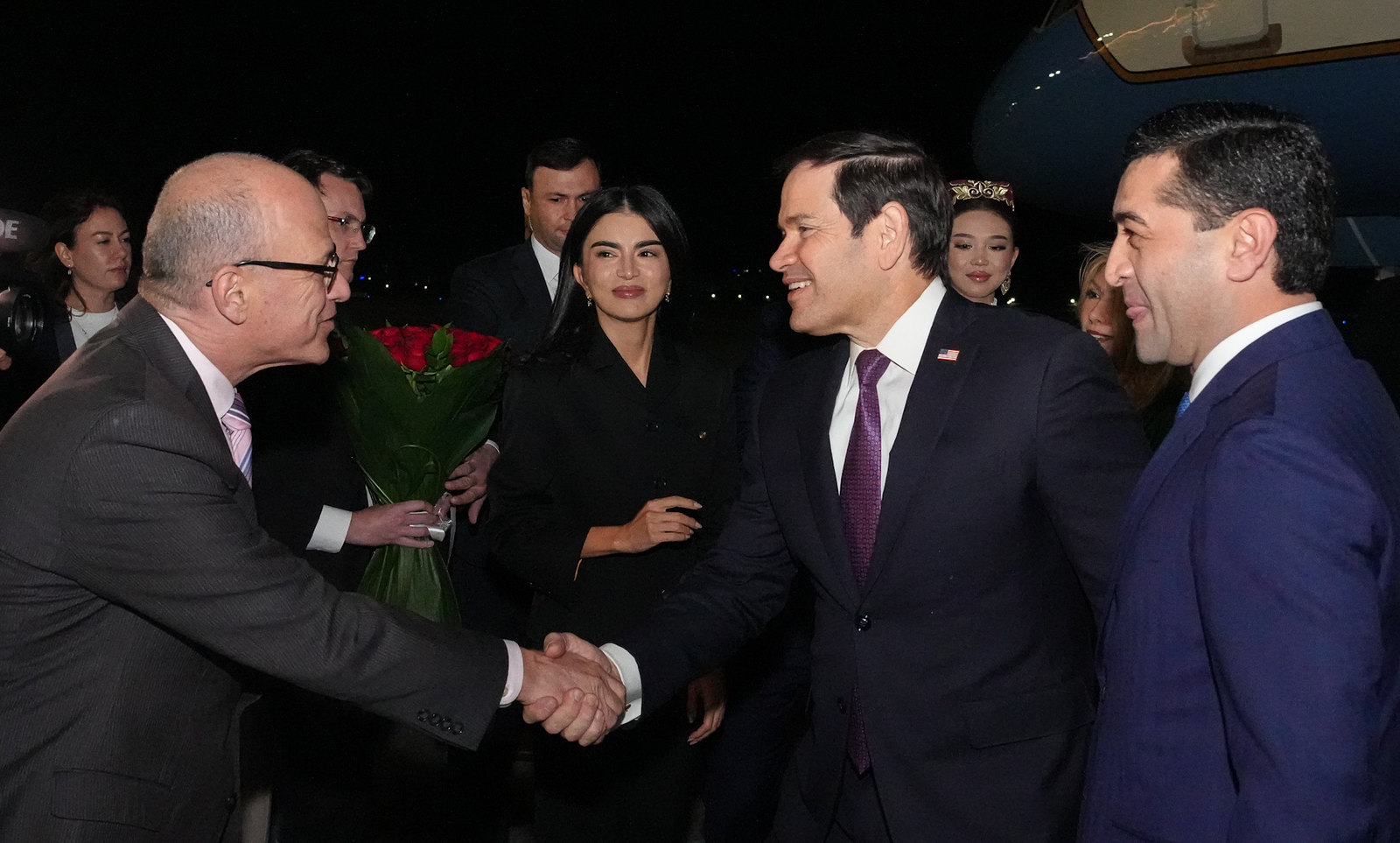
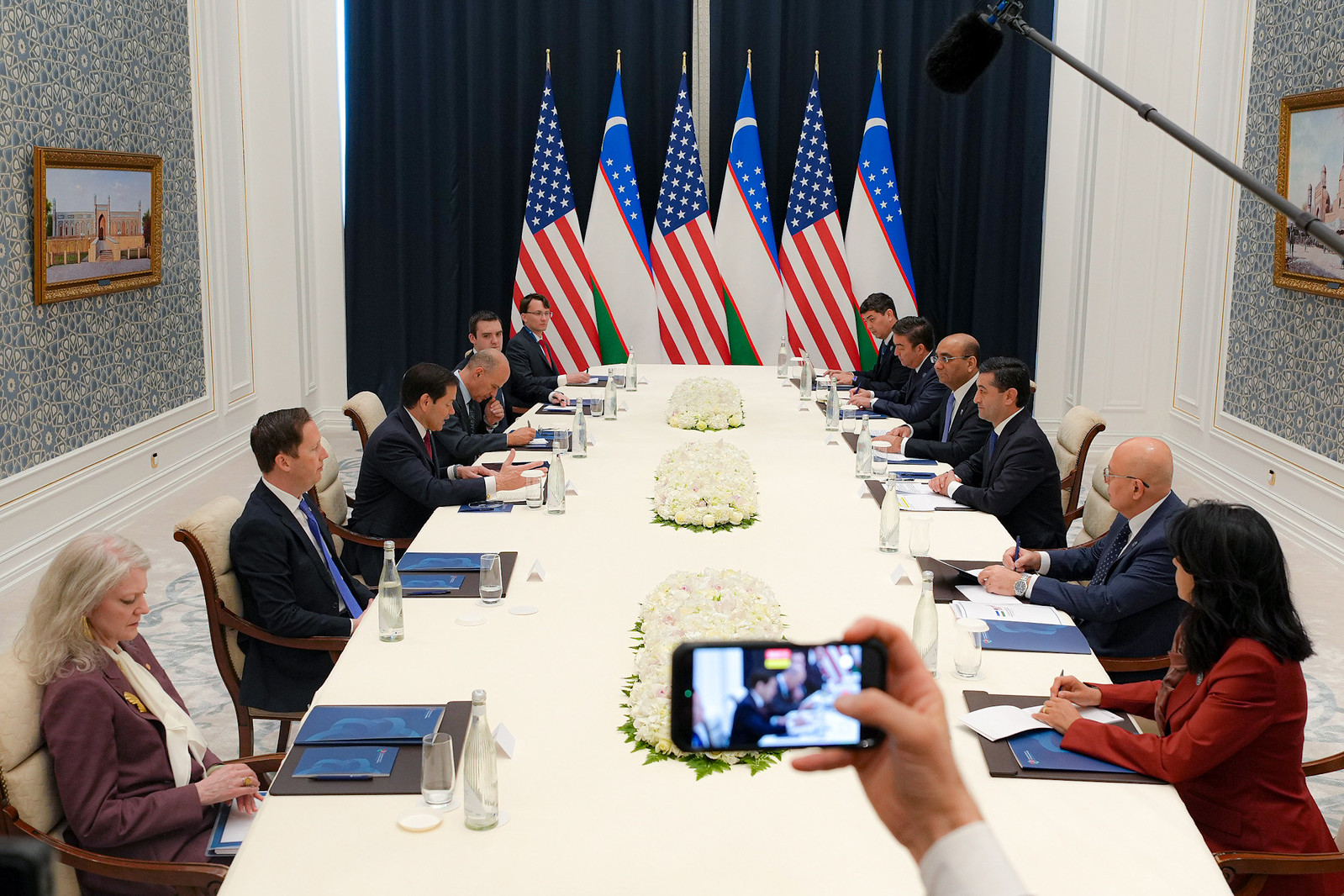
Rubio arrived on 18 October and met his counterparts from Uzbekistan, Kazakhstan, Kyrgyzstan, Tajikistan and Turkmenistan the following day. His programme brought the C5+1 dialogue to Samarkand alongside an American business delegation.1 The official photographs capture both the warmth of the welcome and the work around the negotiating table.
My reading of this moment is positive: Uzbekistan is using international engagement to widen its opportunities. The importance of the visit lies in the country’s capacity to bring people together around a practical agenda. That capacity deserves recognition, as does the responsibility to turn it into improvements that citizens can see.
A confident regional voice
The value of being a place where partners meet
C5+1 connects the five Central Asian states with the United States. Its inaugural ministerial meeting took place in Samarkand in 2015, giving the city a particular place in the platform’s history.2 The 2026 gathering renews that connection and offers another occasion for Central Asian countries to articulate their interests together.
This regional dimension matters. Transport connections, commercial access and investment opportunities often depend on cooperation across borders. A stronger dialogue among neighbours can make each country a more effective international partner. Uzbekistan’s success in hosting such engagement is therefore a contribution to a wider regional opportunity.
There was evidence of that work alongside the main meeting. On 19 October, President Shavkat Mirziyoyev received Kazakhstan’s foreign minister and discussed bilateral cooperation and the implementation of existing agreements.4 The significance is practical: regional relationships continue to require attention even when a major international visitor attracts the headlines.
Credit is due to Uzbekistan’s leadership and diplomatic service for sustaining this level of engagement. A successful host creates the conditions in which partners can listen, negotiate and return to unresolved questions. That is a form of influence earned through patient work, institutional preparation and the willingness to keep dialogue moving.
The freedom to build partnerships
Openness is an expression of national confidence
Uzbekistan’s diplomacy is especially compelling when it expands the country’s room for choice. A wider range of relationships gives a state more opportunities to attract expertise, compare commercial offers and advance its own priorities. The ability to work constructively with different partners should be understood as a strength.
The sequence of visits illustrates this approach. President Mirziyoyev received Chinese Premier Li Qiang on 17 October, shortly before Rubio’s arrival.5 In Samarkand, Rubio himself acknowledged Uzbekistan’s wish to maintain broad international friendships.1 These are distinct relationships that Uzbekistan can develop according to its interests.
For a country seeking lasting development, the most valuable international partnership is one that strengthens domestic capability. Technology, professional knowledge, market access and reliable infrastructure all expand what Uzbek businesses and citizens can do for themselves. The quality of a partnership can be judged by that contribution.
Uzbekistan deserves praise for making itself a place where such possibilities can be discussed openly. Its national interest is best served by confident negotiation, clear priorities and the freedom to assess each proposal on its merits. Samarkand gives that approach a visible international stage.
Diplomacy with an economic purpose
The strongest message is a practical agenda
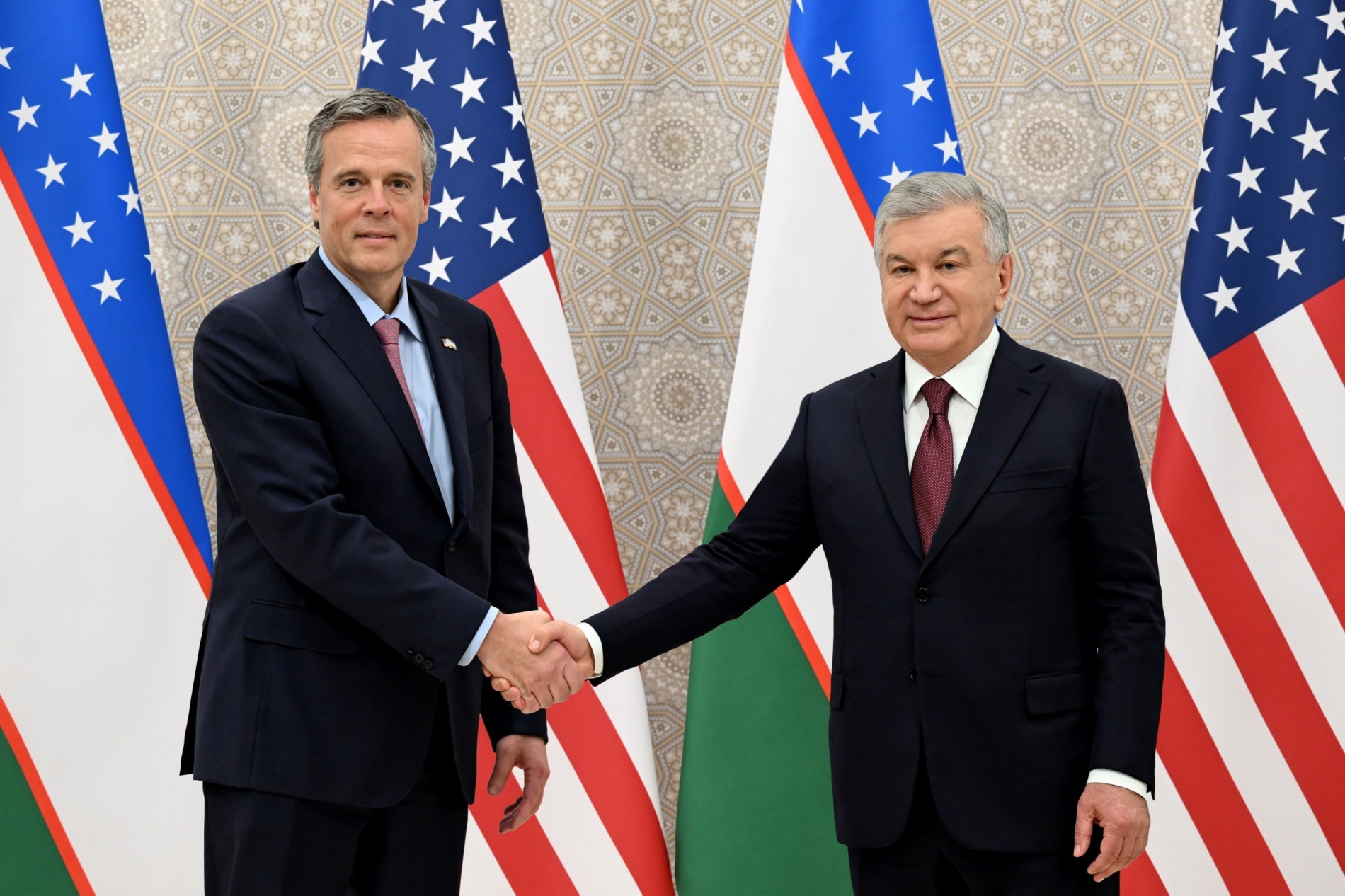
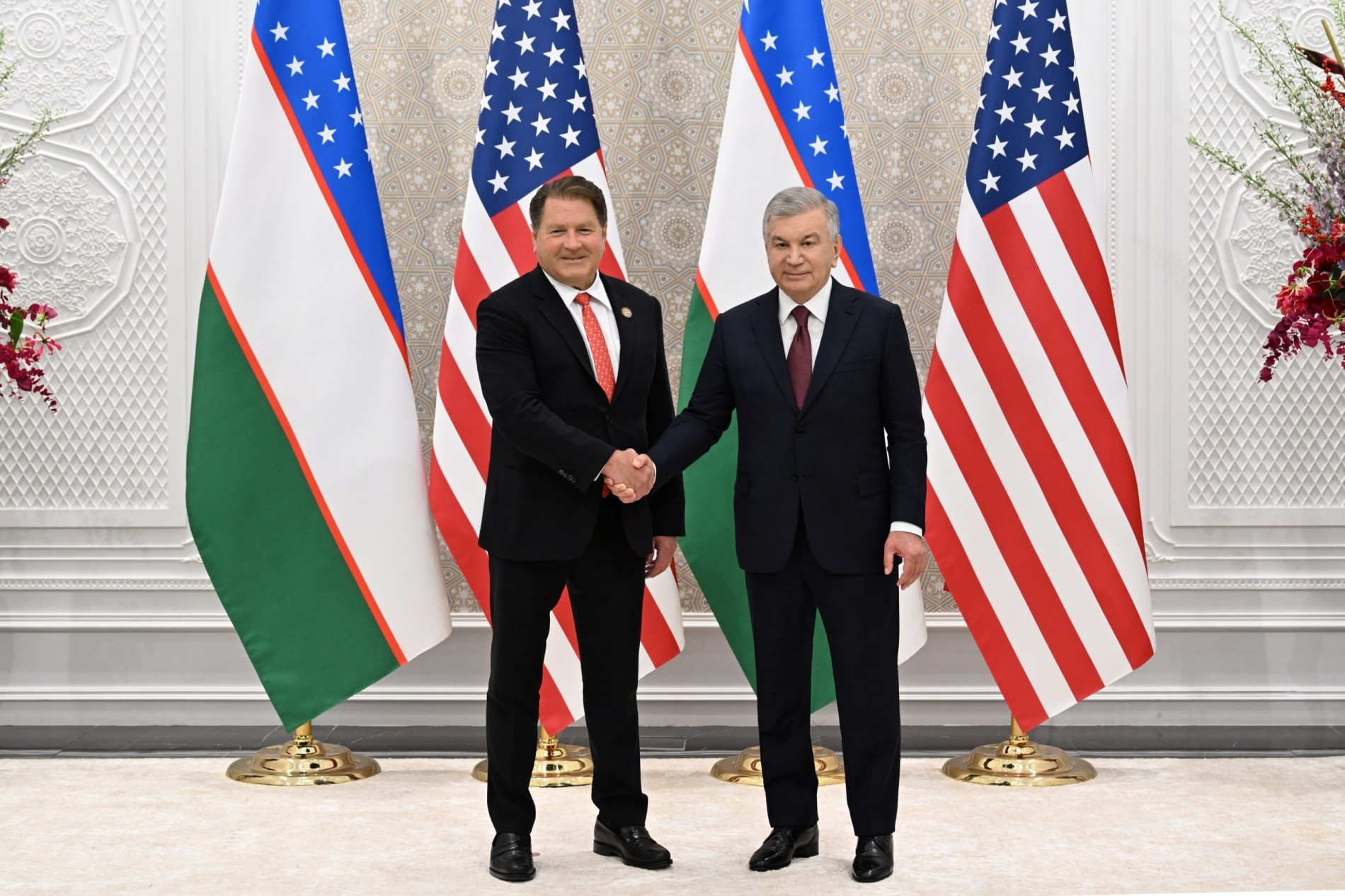
The preparations for this visit were explicitly connected to economic cooperation. When President Mirziyoyev met U.S. Special Envoy Sergio Gor on 16 October, the official account identified concrete projects and the second meeting of the Uzbekistan–U.S. Business and Investment Council among the priorities.3 That emphasis gives the diplomatic occasion a useful direction.
On 19 October, the president’s meeting with Wabtec’s Rafael Santana addressed locomotive supplies, long-term servicing, local maintenance, component production and personnel training. These were subjects of discussion; the published account does not establish that every proposal has become a completed contract.6 Their inclusion nevertheless points to the kind of cooperation Uzbekistan should pursue: equipment supported by skills and a lasting local presence.
The meeting with Traxys CEO Mark Kristoff focused on critical minerals, deeper processing and industrial products with greater added value. The presidency also reported that Traxys had opened its first Central Asian regional office in Tashkent.7 For Uzbekistan, the opportunity is to connect natural resources with technology, specialised employment and more sophisticated production.
A separate meeting with Franklin Templeton’s Jenny Johnson addressed the transformation of enterprises, preparation for further share offerings and management development.8 Taken together, these conversations show an agenda extending across industry, transport and finance. They provide concrete substance for an optimistic assessment of Uzbekistan’s economic diplomacy.
These priorities deserve support. A maintenance workshop can sustain skilled work after a delivery ceremony ends. A processing facility can create opportunities for local suppliers. Better management can improve an enterprise’s performance over many years. Such outcomes require investment and implementation, but the direction of the discussions is encouraging.
For the public, progress will become visible through projects that move into operation, workers who acquire valuable skills and businesses that gain new customers. Those are the standards by which a promising diplomatic moment can become a durable national achievement.
Uzbekistan’s opportunity is to turn the attention it receives into the capability it builds.
Bokhodir SadullaevAn ambition that looks ahead
From a historic city to new fields of cooperation
One development on 19 October carried a distinctly forward-looking message: Uzbekistan signed the Artemis Accords in Samarkand. Dunyo, the Uzbek diplomatic news agency, reported the signing and Foreign Minister Bakhtiyor Saidov’s expectation that it would open possibilities for cooperation, specialist training and access to space expertise.9
NASA describes the accords as a common framework of principles for responsible civil space exploration, including peaceful purposes, transparency and the sharing of scientific data.10 Participation establishes a basis for cooperation; specific missions, funding and technology arrangements require further decisions.
Even with that distinction, the ambition is welcome. Uzbekistan’s young people should be able to imagine futures in engineering, scientific research, advanced manufacturing and international professional collaboration. Diplomacy can help create the relationships through which those ambitions become more attainable.
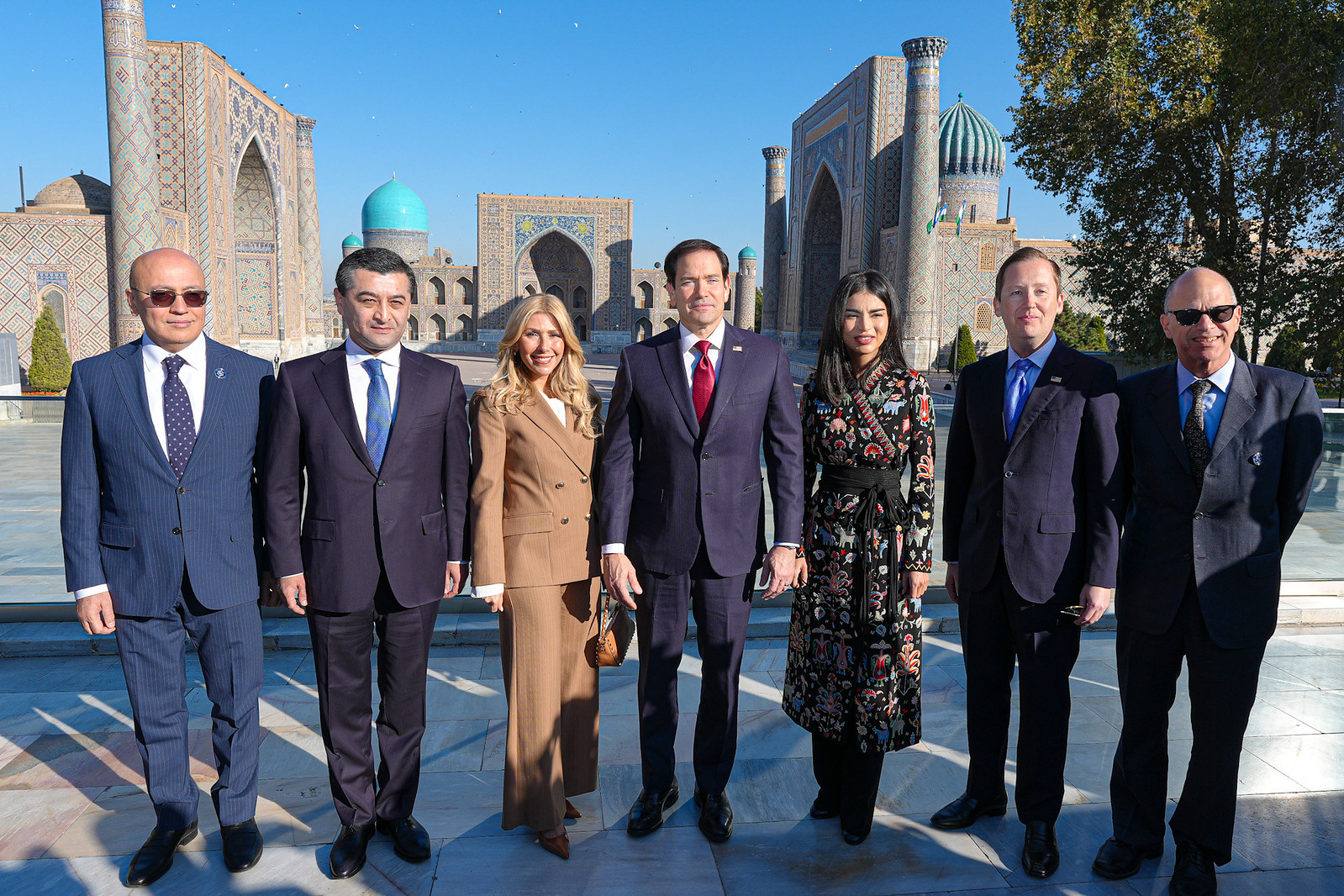
Samarkand gives this aspiration a fitting setting. UNESCO recognises the city as a crossroads of cultures, with an extraordinary architectural and historical heritage.11 Rubio’s visit to Registan on 19 October placed that heritage in the international spotlight. Uzbekistan can draw confidence from its history while investing in the knowledge needed for the decades ahead.
The opportunity after Samarkand
A moment of pride, and a programme of work
There is good reason to take pride in Uzbekistan’s role in this gathering. The country has welcomed senior international partners, supported a regional conversation and placed practical economic questions on the agenda. Those are meaningful achievements in the work of diplomacy.
The next task is to give promising ideas an institutional foundation. Clear contracts, dependable administrative decisions, transparent procurement and credible ways to resolve disputes help businesses plan beyond a single visit. They also help Uzbekistan secure the benefits it seeks from cooperation.
My priorities for the period ahead would be straightforward. Give serious projects clear milestones and responsible institutions. Make training and opportunities for local suppliers part of commercial negotiations. Explain publicly when a proposal advances to a binding agreement, financing and actual delivery. Keep regional coordination active where a project depends on more than one country.
This is a constructive agenda for national confidence. It connects the professionalism of diplomacy with the everyday expectations of an entrepreneur, an engineer or a young graduate. Each has a legitimate interest in seeing international partnerships create opportunities at home.
Samarkand has shown Uzbekistan’s ability to convene. The country’s leadership, diplomats and business community now have an opportunity to carry that momentum into sustained cooperation. The strongest tribute to this visit will be the work that continues after the delegations leave.
Uzbekistan has every reason to approach this moment with dignity and optimism. Its voice is present, its doors are open, and its interests belong at the centre of the discussion. The promise of C5+1 in Samarkand is a future Uzbekistan helps shape through its own initiative.
Reporting references
Sources & photography
Published as an opinion column on 19 October 2026. Assessments and recommendations are the author’s; reported events are linked to the sources below.
- Reuters — Rubio seeks to expand Central Asia ties with pomp-filled Uzbekistan visit19 October 2026
- U.S. Department of State — C5+1Background on the regional diplomatic platform
- President of Uzbekistan — Preparations discussed with U.S. Special Envoy Sergio Gor16 October 2026
- President of Uzbekistan — Cooperation with Kazakhstan discussed on the sidelines of C5+119 October 2026
- President of Uzbekistan — Meeting with Chinese Premier Li Qiang17 October 2026
- President of Uzbekistan — Prospects for cooperation with Wabtec19 October 2026
- President of Uzbekistan — Meeting with Traxys CEO19 October 2026
- President of Uzbekistan — Prospects for expanding cooperation with Franklin Templeton19 October 2026
- Dunyo Information Agency — Uzbekistan signs the Artemis Accords in Samarkand19 October 2026
- NASA — Artemis Accords: principles for peaceful civil space cooperationBackground on the framework
- UNESCO World Heritage Centre — Samarkand: Crossroad of CulturesHistorical and cultural context
The opening photograph is the author’s supplied portrait. The six subsequent photographs document events on 18–19 October 2026. Each carries its date, credit and a link to the official source. Photographs are presented without alterations to their content.